

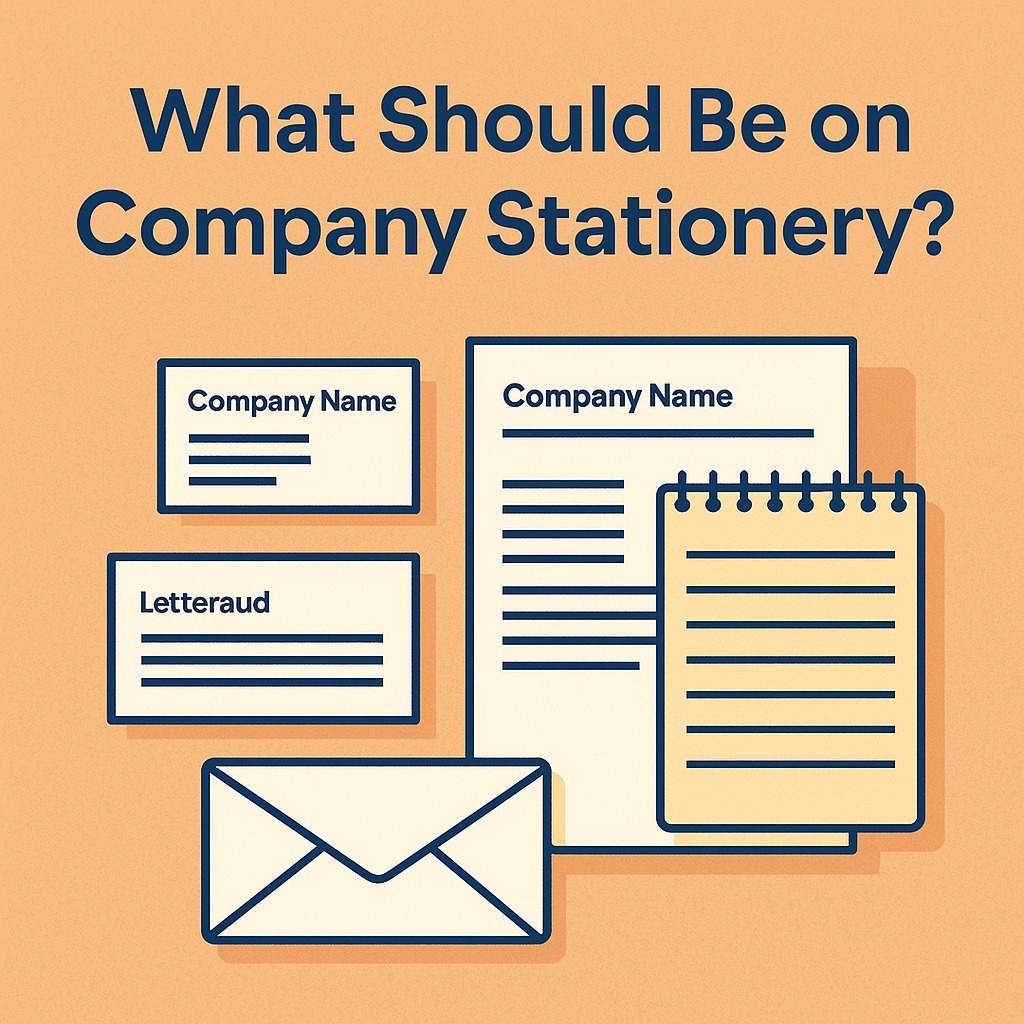
By law, UK company stationery must include: the company’s full registered name, registration number, place of registration (England, Wales, Scotland, or Northern Ireland), and registered office address. If directors’ names are listed, all directors must be included. VAT numbers are required on invoices for VAT-registered companies. Stationery covers letters, invoices, order forms, emails, and websites.
Why Company Stationery Matters
Company stationery isn’t just about good design — it’s a legal requirement. Every business letter, invoice, and email must display certain statutory details to comply with the Companies Act 2006.
But beyond compliance, stationery is part of your brand identity. A professional, consistent look across print and digital materials builds trust with clients, suppliers, and investors. Done right, it shows your company is credible, compliant, and serious about business.
Legal Requirements for UK Company Stationery
According to GOV.UK, the following information must appear on company stationery:
- Full registered company name (exactly as on Companies House records).
- Company registration number.
- Jurisdiction of registration (e.g. England & Wales, Scotland, Northern Ireland).
- Registered office address.
- Legal status – must use “Limited” or “Ltd” unless exempt.
Additional rules:
- If you list directors’ names, then all directors must be included.
- If you mention share capital, it must be the paid-up capital, not the authorised amount.
- VAT-registered companies must show their VAT number on invoices.
- Stationery includes letters, order forms, invoices, emails, websites, and promotional material.
- Company name must also be displayed at business premises.
👉 Non-compliance can lead to fines of up to £1,000, plus daily penalties until corrected.
Beyond the Minimum: What Good Stationery Should Include
While the law sets the minimum, most businesses add more for professionalism and convenience:
- Company logo and brand colours
- Contact details – phone, email, website
- Trading address (if different from registered office)
- Bank details or payment info (on invoices)
- Terms & conditions or disclaimers
- Social media handles
- Professional design – clean layout, readable fonts, high-quality print
Adding these details not only makes life easier for customers but also reinforces your branding.
Types of Company Stationery & What to Include
- Letterheads
- Invoices & Order Forms
- Invoice number
- Date
- Payment due date
- VAT number (if applicable)
- Emails & Email Signatures
- Websites
Your website must display the company’s registered name, number, place of registration, and registered office address — usually in the footer or “About” page.
- Signage & Premises Displays
Your registered name must be visible at your registered office and any other trading locations.
Common Mistakes to Avoid
- Listing some directors but not all.
- Using an abbreviation (e.g. “Ltd”) when the official name is “Limited” (or vice versa).
- Forgetting to update stationery after an office move or director change.
- Using font sizes or colours that make legal details unreadable.
- Omitting legal details from email signatures or websites.
Example Checklist for Company Stationery
Before printing or sending, make sure your stationery includes:
✅ Full registered company name
✅ Company number & jurisdiction
✅ Registered office address
✅ VAT number (if registered)
✅ Consistent branding (logo, colours, fonts)
✅ Contact information (phone, email, website)
FAQs
Do I have to list directors on stationery?
No, but if you do, you must list all directors.
Can I leave out my registered office address?
No — it must appear on stationery, even if you trade from a different address.
Does this apply to emails and websites?
Yes. Electronic communications are legally treated the same as paper stationery.
What happens if I don’t comply?
Fines of up to £1,000 and possible daily penalties.
Conclusion
Company stationery is more than a legal checkbox. It’s the face of your business, ensuring compliance while promoting credibility. By including both the mandatory details and best practice elements, you create stationery that’s professional, consistent, and effective.
👉 At Persona Finance, we can help you audit your stationery to ensure it meets UK legal requirements and reflects your brand in the best possible light.